Showing posts with label Forbidden City. Show all posts

Noel Toy: Our Lady of Feathers


Fandancer Toy was christened Noel because she was born on Christmas Day 21 years ago. Competitors Sally Rand and Faith Bacon are frequent visitors at Leon and Eddie's, follow Noel's graceful movements with appraising eyes.

Here's another fab spread showcasing Noel Toy and her terpsichorean art that appeared in the cheesecake tabloid CO-EDS (May 1942). The photos are accompanied by their original captions.

U. OF C.'S NOEL TOY
NOBODY'S PLAYTHING

CHINA GIRL CAN DISH IT OUT


Broadway's most publicized Chinese (American-born) glamor girl is appropriately named California Co-ed Noel Toy. Tinytot Toy (five feet tall) was a sophomore language major at University of California when she received her first assignment in the chorus of a San Francisco World's Fair midway attraction. There she was discovered, signed up at Fair's close by Frisco's famed Forbidden City hotspot.

Less than a year later, with but five month's experience as a fandancer behind her, she arrived in New York, became Leon and Eddie's headliner.

A growing reputation for biting repartee and devastating treatment of Fifty-second Street wolves earned introduction to Dramaticritic George Jean Nathan, upon whose elegant arm she often attends First Nights. Lee Mortimer, too, finds her a dynamic supper companion, and, it is rumored, she once received a proposal of marriage from Tommy Manville, who explained wistfully that he "had never been married to a Chinese girl."

It must be noted that Noel detests chop suey, is highly allergic to rice.


Start of fandancer Toy's table routine resembles Tahitian grass hut.


She slowly straightens up, pokes head out.


Above, fans cover all but head and feet.


Her fans flash into action with Sally Rand–like skill.


West Coast's Forbidden City nightclub gave Noel start. Now, after 5-month apprenticeship, she ranks with best.


Having made her bow, she continues routine on floor. Noel attended University of California. A language major, she did right well by French, Spanish, German and Latin, flunked Chinese, paradoxically. She speaks English perfectly.


Noel has keen, thoroughly American, sense of humor. Her Christmas card contained tiny V-shaped G-string.

Finally, for a taste of Noel's sharp wit and hearty laugh check out this 2001 interview, taped when she was a spry 80-something-year-old!

Larry and Trudy Leung: Cantonese Capers

"Cantonese Capers" — that's how the comedy song-and-dance duo Larry and Trudy Leung were billed when they toured the U.S. during 1950 in the vaudeville show "Stars on Parade". Earlier that year, the couple had appeared on The Ed Sullivan Show. That performance, filmed during the early days of live television, lies at the heart of Long Story Short (2008), Christine Choy's documentary about actress Jodi Long and her parents Larry and Trudy. After tracking down a tape of the performance, Jodi screens it for her mother and father — more than 50 years after the event. It's a poignant occasion. Larry claims he doesn't remember any of it, yet mouths all the words of his act. Trudy is equally touched. "It's the first time I ever saw myself on stage... I never saw myself before." As her words sank in, I keenly realized the importance of remembrance and felt gratitude for those who've documented the pioneering Asian American performers of yesteryear.

Long Story Short can be watched or downloaded for a very modest price at Amazon Video on Demand. Check out the free preview which includes a clip from their Sullivan Show appearance. Highly recommended!

* A big thanks to Eddy for the reminder about this film.

Noel Toy: Caught in the Act


By chance I came across a fabulous series of photos of Noel Toy at Google's LIFE image archive. They were taken by Nina Leen, one of the magazine's first female photographers. The February 9th, 1942 issue of LIFE featured an article about the flourishing wartime nightclub scene in New York City. Noel Toy, who was fan dancing at Leon & Eddie's at the time, appeared in the piece, and these photos look like they might be outtakes from the assignment.

In the fall of 1941 Noel left San Francisco, where she had got her start at the Forbidden City, for a gig at Leon & Eddie's, which according to the LIFE article was the place to go for "sly ditties, fan dancers, smoky jokes and a general old-style, hot-spot atmosphere". She was so popular that she stayed at the club for half a year. Noel once told a reporter, "If I'd stayed there any longer, they would have had to reverse the name 'Leon' and made it 'Noel and Eddie's'."


Ad from Billboard (February 21, 1942)


Here's the caption about Noel that appeared in the LIFE article:
Chinese Fan Dancer
Noel Toy provides a traditional dash of nudity to Leon & Eddie's floor show. Miss Toy majored in French in college, never drinks, goes out with New York dramatic critics. She is named Noel because she was born on Christmas.

The mention of "New York dramatic critics" refers to George Jean Nathan, who was Noel's "little pet monkey" for a time (according to columnist Dorothy Kilgallen). I don't know how long the romance lasted, but Noel soon settled down with actor Carleton Young in 1945. They were together for nearly 50 years, until his death in 1994.


* Photographs courtesy of LIFE.com

The Most Talked About Show in Town


Kristin Morris, curator of the Swinging Chinatown exhibit, kindly sent this picture of a Chinese Skyroom cocktail napkin (featuring The Wongettes) that is among the photographs, costumes, and memorabilia on display at the Old Mint in downtown San Francisco. The show is only open for three more days — this Friday through Sunday, 12-5 pm — so make sure to drop by if you haven't seen it yet.

A Night at the Old Mint

Tonight was the opening gala for the Swinging Chinatown exhibit at the Old Mint in San Francisco. It was an absolutely fabulous celebration of Trina Robbin's new book Forbidden City: The Golden Age of Chinese Nightclubs and the pioneering Asian American performers who created stages of their own on which to fulfill their dreams.

Honestly, I was so excited to be there that I was unable to savor the amazing collection of photographs and memorabilia on display. Curator Kristin Morris, of the San Francisco Museum and Historical Society, did an outstanding job of organizing the exhibit, which exceeded by leaps and bounds my already high expectations. Besides the images that appear in Trina's book, there were fantastic photos from the collection of the Chinese Historical Society of America, as well as two from my own collection.

As for the performances, I don't think I stopped grinning the whole time the show was going on. The Grant Avenue Follies performed three numbers ("Chinatown, My Chinatown", "Love Is a Many-Splendored Thing", and "All that Jazz"); Jimmy Borges, who flew in from Hawaii, rocked the mike with two tunes (including one he wrote just for the occasion, "I Found My Heart in San Francisco"), and The Shanghai Pearl turned up the heat with a classic striptease and fan dance. Emcee Ben Fong-Torres kept the proceedings smooth, spontaneous, and funny.

I took lots of pictures, but unfortunately I wasn't able to make the best of my brand new 100-buck Kodak. Here are a few that came out all right.


The Grant Avenue Follies proving that you're never too old to swing


Burlesque bird of paradise The Shanghai Pearl flashing her feathers


Two photos from my own collection, showing choreographer Walton Biggerstaff


Yours truly with the truly wonderful Trina Robbins

The exhibit is only open for seven days: Friday, February 12 to Monday, February 15 and Friday, February 19 to Sunday, February 21; noon to 5pm. If you live nearby or are passing through the area, do not miss this rare and precious glimpse of the Golden Age of Chinese Nightclubs. I know I'll be making another visit!

Swinging Chinatown at the Old Mint


Forbidden City chorus girls

Okay folks — get ready for something really special! The San Francisco Museum and Historical Society will be hosting an exhibition in celebration of Trina Robbins' new book Forbidden City: The Golden Age of Chinese Nightclubs.

The fabulous photo you see above is just one example of the precious ephemera that will be on display at the museum's new home in San Francisco's Old Mint. Because the building is still being prepared, the Swinging Chinatown exhibit will only be open for a very limited time: Friday, February 12 to Monday, February 15 and Friday, February 19 to Sunday, February 21; noon to 5pm.

If you live in the Bay Area, do not miss this rare opportunity to glimpse this glamorous and groundbreaking chapter of Chinese American history. The exhibit will include more than 100 vintage photographs, dancer Ellen Chin's costumes and gold dancing shoes, Tony Wing's tap shoes, as well as menus, napkins, and other memorabilia from San Francisco's Chinese nightclubs.


Ellen Chin's gold dancing shoes

But wait — there's more! On Thursday, February 11 there will be an opening gala. The tickets are rather steep, but it's for a good cause — to raise funds for the museum. Besides, the event promises to be a night to remember. Local journalist and radio personality Ben Fong-Torres will be master of ceremonies. The Grant Avenue Follies will be providing entertainment, as will former Forbidden City singers Ellie Chui and Jimmy Borges; and contemporary burlesque performer The Shanghai Pearl will be demonstrating precisely why she is known as the Princess of Pulchritude. Finally, let's not forget the grand dame of the evening, the sweet and charming Trina Robbins, who made all of this possible.

Hope you can make it!

Toy and Wing: Turning On the Heat

Lately I've been trying to track down the movie appearances of various Forbidden City performers. Needless to say, they are few and far between, and often not what they promise to be.

Noel Toy, the most famous exotic dancer of the Chinese nightclub era, is the headline act at a San Francisco strip club in the Betty Grable movie How To Be Very, Very Popular (1955). I wasn't exactly surprised when I read in the movie synopsis that she plays the murder victim who sets the plot in motion, but I was pretty disappointed when I finally saw the movie. Can you believe that she doesn't even get to dance before she gets killed?!

Chinese Skyroom owner Andy Wong and exotic dancer Barbara Yung are listed as appearing in the Frank Sinatra film Pal Joey (1957), but when I watched the movie, they were nowhere to be seen, at least not on the DVD.

Dance team Jadin Wong and Li Sun allegedly appear in Around the World (1944), a musical comedy showcasing Kay Kiser and his band as they trot the globe entertaining U.S. troops. When the band stops in Chungking, you'd think it would be the perfect opportunity for Jadin Wong and Li Sun to strut their steps — but what the eff?! Where did they go?

Is this some kind of conspiracy? In a color-blind industry, some of these talented folks could have been stars. But in Hollywood, they simply disappeared.

Lucky for us, there are two performers who, by comparison, are well represented on celluloid: Dorothy Toy and Paul Wing. I won't bother telling their story, since it's readily available elsewhere.

You can read about Dorothy in Aging Artfully by Amy Gorman (available here on Google Books).

And don't miss this wonderful documentary made by Rick Quan (the first Chinese American sports anchor in the United States and a familiar face on Bay Area television for more than 20 years).

Okay, enough sour grapes. Let's enjoy the sizzling Toy and Wing in the musical short Deviled Ham (1937).


* The entire film is available here.

Socko: San Francisco's Chinese Nightclubs

Here are three reviews from Billboard magazine of San Francisco's top Chinese nightclubs during the 1940s. They provide a great snapshot of that era.

You'll notice that Walton Biggerstaff is credited for the productions at all three clubs. He also trained many of the dancers back then. I'll have more to share about him later.

I was also surprised to see a few names that I'd never come across before, like Chinese Skyroom "showstopper" Roberta Wing and cavorting trumpet player Prince Gum Low. Just more proof that, in spite the wealth of material presented in Arthur Dong's documentary and Trina Robbins' new book, there are still more stories waiting to be told.

And of course, who can resist the enticing promise of the Wongettes and their "snappy cake-walk routine"! More about them later, as well.

Well, without further ado, please give a hand for the talented Asian American performers of "The Golden Age of Chinese Nightclubs"...


Kubla Khan,
San Francisco

Talent Policy: Dance band and floorshows at 7:30, 9:30 and 12. Owner, Eddie Pond. Prices: $1.50 minimum. Dinner from $2.50.

Whole Show: good; features Chinese acts and dance line; well received.

Best Job: FRANCES CHUN, thrush with deep qualities; on order of Frances Langford; "juke box medley" outstanding; socko.

Other Acts: JADIN and LI-SUN, dancers; individual stylists; flair for comedy; work well together. MAE LEE, singer; does semi-classics and light opera; clear, pleasing soprano; good hand. PRINCESS LOO HING, fem magician; works alone; tricks standard. ELEANOR YOUNG, Chinese Carmen Miranda; graceful, good voice; sells okay. KUBLA DANCERS (6), pretty group in several Walton Biggerstaff produced numbers; gowned gorgeously.

Band: BILL OETKE'S RUMBEROS (8) play a snappy show and hip-shaky numbers. Owner Eddie Pond emcees. Business capacity.

Edward Murphy

— Billboard, August 11, 1945


Chinese Skyroom,
San Francisco

Talent Policy: Dancing and Floorshows at 8, 10 and 12. Owner-manager, Andy Wong; production, Walton Biggerstaff. Prices: $1.50 minimum; no cover.

Strictly a Chinese line-up. The Six Wongettes get things started with a snappy cake-walk routine. Gals are fresh-looking and put plenty of punch in their dancing. Costumes are abbreviated but gorgeous. Mirth spot in show handled by Prince Kim Low [Prince Gum Low], who literally blows himself blue in the face with satirical trumpet solos. Paunchy, yet light on his feet, the prince cavorts with the patrons. Gets hearty laughs.

Sweetly lyrical is Beatrice Tom, a cute lark who does well with Embraceable You and I've Got the World on a String. Has good microphone poise. A shot of the sensational is Ah Wing, magician, who baffles with a fire-eating act and ekes gasps from ringsiders by poking a flaming fire-stick down his gullet.

Kim and Jessica Wong put a touch of the Oriental in a rumba number. Makes for good entertainment. Plenty of hand-clapping. Showstopper, however, is Roberta Wing, petite vocalist with a style all her own. Has plenty of verve and a catchy lilt to her voice. Especially good in Tampico and Rosemary. Begged off after taking five encores.

Finale is a madhouse, with the entire troupe milling around to Begin the Beguine. Suave Sammy Tong emcess. Don Ferrara's ork (6) backs up show effectively.

— Billboard, April 20, 1946


Forbidden City,
San Francisco
(Saturday, December 28)

Talent Policy: Floorshows at 8, 10 and 12. Owner-operator, Charlie Low; manager, Frank Huie. Prices: $1.50 minimum.

Clicks could be heard all over the room as Charlie Low unfolded his new Chinese Gay '90s with all-Chinese talent. Produced by Walton Biggerstaff, the revue is fast moving, picturesque and is drawing oodles of clientele in a sagging market.

Opened with the Forbidden City Debutantes (8) and Bobby Wong in a medley. Girls, in old-fashioned gowns, and boys in loud, striped suits, danced thru the medley for a good mitt. Larry Ching soloed oldies and was rewarded with a solid hand.

Three boys and three girls got top reception for their Floradora sextet bit in which they mixed old waltz songs and dance numbers. Low, who emceed the show, then brought on Ching for more oldies, and he encored with Daisy, Old Gray Bonnet, and When You Wore a Tulip. Much applause.

Comedy highlight was Toy Yat Mar, ordinarily the fem chirp star, who appeared with two chorines garbed in ballet costumes to do a Belles of the Ballet number. Good for three encores. The Mei Lings followed with a graceful Merry Widow and a fast Cuddle Up. Miss Mar then came on again in a brace of Sophie Tuckerish tunes.

A French can-can closed. Henry Abramson's ork (7) did an okay job on show and dancing. Room was full.

Edward Murphy

— Billboard, January 18, 1947

* Forbidden City matchbook courtesy of Johnny Dollar's Vault.

Cathay Hey-Hey!

Here's the article from Collier's (February 28, 1942) which accompanied that deliciously lurid photo of Joy Ching I posted last weekend.

There's a nice bit about singer Li Tei Ming, Charlie Low's second wife and also one of the reasons he opened Forbidden City. The description of her singing "Loch Lomond" ("a swing version with Congo rhythms, with an accent partly Scots-Pacific Coast and partly 'Way Down South Cantonese") really drives home the connection between the Chinese American nightclub performers of the 1940s and vaudevillians of the early century like Lee Tung Foo.

It's also interesting to read that "in some of the clubs half the patronage is Chinese". This goes against the general impression I've gotten that the audiences were mainly non-Asian tourists and servicemen.

Finally, let me add my two cents about the oft-repeated assertion, mentioned below, that the reason clubs such as Forbidden City hired all-white bands was because Chinese American musicians just couldn't play Western music. Well, I recently learned that by the 1930s Chinatown already had two dance orchestras: the Chinatown Knights and the Cathayans. In fact, Andy Wong, who opened the Chinese Sky Room, used to be a trumpeter in the Chinatown Knights. Evidently he once hired some of his fellow band members to play at his club, and guess what — they were picketed by the local musician's union, which excluded Chinese Americans from membership at the time. Now, that puts the issue in a new light, doesn't it?


CATHAY HEY-HEY!
BY JIM MARSHALL

It took seventy-five years to break down Chinatown's ban against its daughters dancing and singing for the barbaric whites — but now look at them.


It was a bit confusing until you got the hang of it. This pretty American girl — Li Tei Ming — who was pure Chinese and a philosophy major from the University of Washington, was singing Loch Lomond, a swing version with Congo rhythms, with an accent partly Scots-Pacific Coast and partly 'Way Down South Cantonese.

"By birth and sentiment I'm an American," explained Miss Li, just to clear everything up, "but professionally I'm Chinese, and I can also sing Loch Lomond with an Irish brogue, a Cockney accent or in the South American way."

This made everything as plain as your Grandaunt Emma, but things went haywire again when a Chinese waiter, speaking Spanish with a Texas drawl, came around and served a long Cuban drink to a tiny, gray-haired, feet-bound Chinese woman in a long, black Mandarin gown, who spoke nothing but the Cantonese singsong.... All this was in a night club called the Forbidden City, on Sutter Street in San Francisco, and was part of a scenario titled The Triump of American Folkways over Orientalism.

Until recently the Chinese in America held out pretty well against the mad customs of the Americans. Although, as the years passed, more and more "Chinese" were born here and educated in American schools, the stern family rule of the Orient held sway. The children learned Cantonese and were not allowed to have much truck with the barbaric whites, most of whom couldn't trace back their ancestors more than three generations. Then along came the war, and we became China's ally against the common enemy, and things changed.

It Used to Be Different

Up to three years ago San Francisco's Chinatown — the biggest Chinese city in the Western Hemisphere — maintained its customs and dignities almost untouched by the West. It was — and still is — under the iron rule of the Six Companies, which mete out justice and keep order so well that the appearance of a Chinese in a city court has always been a rarity.

The Chinese had their own theaters and amusements but, as a concession to the tourist trade, maintained occasional tong wars and trick opium dens, many of the former being dreamed up in dull nights in the police-station press room. A tong, actually, is just the Celestial version of the Rotary, or Elks or Moose, but tradition insists that any gunnery or hatcheting in Chinatown is a tong war and that's all there is to it.

There was a lot of critical chatter around the Six Companies headquarters in 1936 when a rebel named Charley Low opened a cocktail bar on Grant Avenue. No Chinese girl was allowed inside, and at first no Chinese came. Tourists did, though, so many of them that in 1938 Charley had Confucius twirling in his grave at the opening of the first Chinese night club on the American plan.

It was tough going, because the ban against Chinese girls in such barbarous places still held and, to top that, no one ever has been able to assemble half a dozen Chinese into a band capable of playing Western music. The boys from South China just can't get those Congo rhythms. Bands in Chinese clubs are white, to this day.

When Charley did succeed in getting a dozen girls as dancers and singers, it still was hard to teach them American dance steps — although they were all American-born and educated. A Chinese-girl dance line still is far behind the Rockettes, but since it is becoming increasingly hard for Americans to discover any rhythm in today's music, nobody minds much.

At first, only tourists patronized Chinese night clubs, expecting to whiff opium smoke and maybe see a hatchet or two flying. All they saw was Miss Joy Ching (Home Economics, University of Chicago) doing a strip tease as The Girl in the Gilded Cage; and Miss Mary "Butch" Ong dancing along with the Misses Ruby Chew, Rose Chan, Ruth Lee, Minnie Yuke, Eleanor Wong and Faye Ying, who were being the Chinese Floradora Sextet at the moment.

Too New for Sophistication

After a while, the San Franciscans themselves began dropping around to Chinese night spots, and finally the older Chinese themselves peeked in to see what was going on and became regulars. In some of the clubs half the patronage is Chinese.

Now, there are more than a hundred Chinese girl entertainers and waitresses in Chinatown's dozen clubs and bars, but many of the old Chinese families still forbid their daughters to appear in floor shows or mingle in cocktail lounges with people from outlandish places like Iowa and New York.

China changes slowly, and the night club idea still is so new that there is, among the girls, none of the hard-boiled sophistication that is the trademark of their white sisters in Eastern American cities. They're more like a bunch of college kids having a good time — and in fact, more than two thirds of them are graduates of Western universities.

The entertainment is happy-go-lucky, and astounded patrons are sometimes enthralled when the lad handling the spotlight lets go all holds and tries out a white searchlight on a fan dancer instead of the traditional misty blue. And Miss Ching, who poses almost n-k-d at times, has a very fine appendicitis scar two and one-eighth inches in length, and thinks nothing of it. No customer has ever complained.

Most of the entertainers are versatile and a favorite amusement of the line girls is translating American songs into Cantonese — in which language they become even more baffling than in the original. Li Tei Ming, who stars as a singer in the Forbidden City show, not only designed the club layout, but painted the murals.

Every Chinese entertainer imitates some American, and the club floors are crowded with Chinese Bing Crosbys, Chinese Sally Rands, Chinese Maxine Sullivans and Chinese Fred Astaires.

Success of the Chinese invasion of the entertainment field has resulted in the making of Chinese talkies in San Francisco. With the usual Oriental economy a Chinese director can take a thousand feet of negative and make nine hundred ninety-nine feet of movie out of it. The result appalls Hollywood, but wows Chinatown, where the kids gather around for autographs when Chinese stars, unknown to the West, attend premieres. And in Los Angeles, where a brand-new Chinatown has been built, there is going to be a theater for producing Chinese plays in English — or as much of an eight-hour Chinese drama as the white race can take at a gulp.

There's one Western custom no Chinese girl entertainer will surrender to, however. She won't bleach her hair. There are no Chinese blondes — and there never will be.

Joy Ching: Girl in the Gilded Cage


"Miss Joy Ching imparts an Oriental touch to an old American art form as The Girl in the Gilded Cage — a San Francisco Chinatown striptease."

The above photo and caption, from an article that appeared in Collier's (February 28, 1942), luridly answers the question asked a few days ago about what exactly tourists hoped to see inside San Francisco's famous Forbidden City nightclub.

Joy Ching appears to have been a replacement for Noel Toy, the "Chinese Sally Rand" who made Forbidden City a solvent business with her popular bubble dance.

Owner Charlie Low didn't have to be a genius to figure out what made folks flock to his club. When Noel Toy left Forbidden City for more lucrative pastures, Charlie knew he had to find another exotic dancer to keep the cash flowing.

Charlie Low Dreams Up "The Girl in the Gilded (Neon) Cage"

The nation's no. 1 Chinese night club, whose excitements have been extolled by Life, Pic, and other national mags, is doing one of those crazy, wonderful things again.

From the fertile brain of Boss and MC Charlie Low comes the new storm that will sweep over Forbidden City any day now: a tempting Chinese thrush in a bird-cage of golden neon.

Watch for the nude Miss Blossom Lee, "The Girl in the Gilded Cage".

In fact, if you don't keep your eye on Forbidden City all the time, you'll be missing night-club history in the making. Charlie Low has conceived more novel, sprightly, exciting entertainment ideas than any two other showmen in town...

—The Coast, May 1941

Blossom Lee, soon to be known as Joy Ching, was partnered with Jack Mei Ling, one of Forbidden City's first, and longest staying, dancers. At various times, Jack performed as a duo with Jadin Wong and Jade Ling and also as a trio with Mary Mammon and Dorothy Sun. Not only did he choreograph the dances, but he also designed the costumes. As Anthony Lee writes in his fascinating book Picturing Chinatown, Jack developed a unique Orientalist camp style that allowed him to come out of the closet as a gay man on stage in his performances.


Customers Love (!) Charlie Low's (!) Caged Honey (!)

Her name was Betty Lee. Then it became Blossom Lee. Now it's Joy Ching. Under any name she's The Girl in the Gilded Cage. Under any name, too, she's un-Orientally lush with a wallop in nearly all of her dextrous extremities. And this, you may be sure, brings a twinkle to the eyes of customers... and a double twinkle into the eyes of smart Charlie Low, who's the Boss... and the guy who cooked up the Gilded Cage idea in the first place.

That's Joy in the picture above, after emerging from the Cage... in the act of being pursued by another bird, Jack Mei Ling.

—The Coast, June 1941

An act like "The Girl in the Gilded Cage" is one example of how performers at Forbidden City used burlesque to confuse and overturn the definitions of "Chinese" and "American" in U.S. popular culture at the time. Besides its obvious visual reference to the crib prostitutes of old Chinatown, the act also references American vaudeville — the song "A Bird in a Gilded Cage" was an enormous hit in 1900. Add the humorous touch of the neon cage and Jack Mei Ling's camp aesthetic, and you've got a unique twist on the yellowface tradition.

The performers of Forbidden City and San Francisco's other "all-Chinese" nightclubs were more than a novelty. They may not have overturned the unequal representation of Asian Americans on the stage and screen, but they nevertheless found a way to express their talent and ambition.

Forbidden City: Behind the Curtain


"Chinese chorines make up for the floor show at the Forbidden City. This Oriental night club is less sinful than many tourists expect."

I love surprises. After seeing this photograph reproduced in Trina Robbins' new book, Forbidden City: The Golden Age of Chinese Nightclubs, I tracked down a copy of the magazine it came from (Holiday, July 1948) and found that the original photo was not black and white — as I expected — but full and living color!

Tales from the Forbidden City


I finally got my hands on Trina Robbins' just published Forbidden City: The Golden Age of Chinese Nightclubs. Ever since I heard about it earlier this year, I've been eagerly waiting to read it.

Presented as an oral history, the book records the recollections of nearly two dozen Asian American performers who worked in San Francisco's "all-Chinese" revues from the late 1930s through the 60s. The transcribed interviews of the artists, and their friends and relatives, paint an intimate portrait of this unique cultural scene. Profiled are some of the better known alumni of the Forbidden City nightclub — like singers Larry Ching and Frances Chun and dancers Dorothy Toy, Tony Wing, and Jadin Wong — as well as other performers I'd never heard of before, such as:

  • Ellen Chinn, Forbidden City dancer and, according to news of the day, "possessor of Chinatown's most beautiful pair of legs"

  • Mai Tai Sing, Forbidden City dancer who later ran a cocktail lounge (The Ricksha) in SF Chinatown and played a bit part in the 1960 TV show Hong Kong, starring Rod Taylor

  • Coby Yee, "China's Most Daring Dancing Doll", an exotic dancer who performed off and on at the Forbidden City and later bought the club from founder Charlie Low in the mid-60s

  • Cynthia Yee, dancer in Dorothy Toy's various revues, Miss Chinatown of 1967, and founder of the Grant Avenue Follies

One of the best things about the book are the more than 200 illustrations, ranging from newspaper ads and magazine articles to family photos and glamor shots. They are absolutely priceless. It's too bad that Forbidden City wasn't packaged as a glossy coffee table book instead of a humble softcover edition.

My only legitimate complaint is that the book lacks a strong organizational structure and design. Individuals are presented without a clear introduction, which makes it is easy to get lost when reading the book for the first time. In addition, the book could have benefited from a little more historical background to help set the stage for these pioneering performers.

Nevertheless, the social context can be gleaned from within the stories. And I'm grateful that Trina chose to include three particular documents which serve as forceful reminders of the racial barriers existing at the time: namely, official letters from the state bars of Idaho, Nevada, and Utah denying a marriage license to dancer Ellen Chinn and her sweetheart Robert Price. In the words of the State Bar of Nevada: "It is a crime in the State of Nevada for persons of the Caucasian or white race to intermarry with any person of the Ethiopian or black race, Malay or brown race, or Mongolian or yellow race." I must admit, that one sentence sets the stage as well as any introductory essay.

In spite of the misgivings mentioned above, I wholeheartedly recommend Forbidden City to any one interested in the fascinating era of America's Chinese nightclubs. It is an invaluable resource that will undoubtedly spur further appreciation for the rich history of Asian American performers.

Chinatown Girls: Mary Mammon and Dorothy Sun


Featured in Arthur Dong's documentary Forbidden City U.S.A. (1989), Mary Mammon and Dorothy Sun performed in the original chorus line at the legendary "all-Chinese" San Francisco nightclub. In 1938 owner Charlie Low put out a call for dancers. Because local girls faced too much opposition from their families, the only girls who applied were those from out of town — like Mary Mammon, born and raised in Clifton, Arizona, and Dorothy Sun, born in Coulterville (a mining town in the foothills of the Sierra Nevada) and raised in the California Delta.

Mary and Dorothy must have been great pals, because they evidently worked together through much of the 40s: on and off at the Forbidden City and other San Francisco clubs, such as the Lion's Den; and on the road in Kenneth Walker's "Chinese Follies" revue, which toured the U.S. and entertained troops with the USO in the South Pacific.

From what I can tell, Mary was the sexy one, with her hula and fan dances, while Dorothy was the funny one, with her "eccentric" dance parodies.

Here are the two in an Associated Press feature about Mary Mammon that ran in Sunday papers all across the country. This particular scan comes from the Fort Wayne Journal-Gazette (June 15, 1941).

CHINATOWN GIRL

Chinatown in San Francisco, where 20,000 persons live in less thank 20 square blocks, is the largest Chinese settlement outside the Orient. Once it was reputed to hold all the sins and exotic charms of Old China. But a new generation is in command. Schools, churches and playgrounds have routed oldtime tong wars and racial taboos. Authentic Chinatown fixtures remain mostly for the tourist trade. The commerce and the way of living is one of America's newest revolutions in this best known foreign quarter of any U.S. city. The women, who not so long ago lived in household seclusion, have stepped into the new role of being American women. Mary Mammon is typical.


A LATE SLEEPER, Mary's hours would have shocked old Chinatown. She is a featured dancer in one of the new night clubs, timidly opened but an instant success. Now she gets home in the small hours, but the family — mother, sister, two brothers — doesn't mind.


SOCIAL LIFE is a daylight pursuit. Mary loves soda fountain lunches, scoffs at chop suey, but likes mother's real Chinese cooking. At 22, Mary, who was born in New Mexico, chooses her own "dates", clothes, employment, and is popular in the community.


AT WORK, Mary and chum, Dorothy, dance and sing in the Lion's Den club. Pay is not high by American theater standards, but Chinatown girls find employment limited; to them, wages are tops.


STYLISTS say, dollar for dollar, Chinese girls dress more smartly than their American sisters. Top, Mary at her daily pressing job; bottom, stepping along tong-scarred old Waverly Place with pal, Dorothy Sun. Note aged delivery man with tray on head, a survival.


MARKETING takes the girls into a shop brimming with exotic foods, preferred to those in Americanized stores. "Delicacies" here don't tempt Americans. Mary wanted some hard dried fish — among other "native" items on her list. A sale is a ceremony.


STUDY has meant much to Mary — high school education, speedy Americanization. Her father (deceased) changed family name, Mar, to Mammon.


SUNBATHS, slacks, shorts cause oldsters to wag heads, but are common. And permanent waves are slowly turning black hair to brown.


FIRST JOB was typing, then Mary waited tables. When demand for Chinese entertainers arose, she studied dancing. Meanwhile, war in China liberalized the community — women helped with relief work.


AT HOME, furnishings are American style. But the women still treasure their embroidered silks, the tight, slinky gowns of Old China, however ill-adapted they may be to modern athletic figures.

* The Forbidden City ad at the top of the page comes from The Virtual Museum of the City of San Francisco.

Life Goes to the "Forbidden City"


Trina Robbin's new book Forbidden City: The Golden Age of Chinese Nightclubs has just been published and is available directly from the publisher (and also from Amazon). I'll post my thoughts about the book as soon as I get my hands on it, but in the meantime here's the Life magazine article (December 9, 1940) that brought Charlie Low's Forbidden City to national attention. A scan of the original is available here.

BTW, the two dancers with the lassos at top are Mary Mammon (left) and Dorothy Sun (right), who also appear in the photo just beneath. Closing this post is the inimitable Jadin Wong. I'll have more to share about these ladies in the coming weeks.

Finally, for an interesting and nuanced examination of the Orientalism served up at the Forbidden City nightclub, check out Anthony Lee's book Picturing Chinatown: Art and Orientalism in San Francisco (2001). As he writes, "The acts played on the distinction between the race of the performer and the race being performed in ways that revealed the contingency and malleability of both."

As a matter of fact, this strategy harkened back to the early days of vaudeville when Chinese American entertainers, like Lee Tung Foo and Jue Quon Tai, carved out a niche for themselves on the stage and in the public eye by performing a unique blend of yellowface and whiteface.

As you can see in the article below, Chinese American performers in the 1940s were still navigating the conflicting expectations of what it meant to be a Chinese living in America.

Life Goes to the "Forbidden City"
San Franciscans pack Chinatown's No. 1 night club


At 363 Sutter Street in San Francisco stands "Forbidden City", the No. 1 all-Chinese night club in the U.S. Here each evening Californians flock to watch a talented floor show that ranges from slumberous oriental moods to hot Western swing. San Francisco is numerically ill-equipped with Broadway-style cabarets. Its citizenry eats at home, dances at hotels. When "Forbidden City" opened two years ago, it filled a local cultural need. It has prospered ever since.

In decor, "Forbidden City" blandly jumbles rice-paper screens, lighted fishbowls, college colors and football trophies. Somehow the net result is satisfactory. Its tri-nightly floor show as blandly scrambles congas, tangos, tap numbers and snaky stuff from the Far East. Chinese girls have an extraordinary aptitude for Western dance forms. As singers, not many achieve success according to occidental standards. But slim of body, trim of leg, they dance to any tempo with a fragile charm distinctive to their race. Opposite you see gracious Jadine Wong performing her chaste "Dance of the Moon Goddess".

Noel Toy: She's Fan-tastic!


"She was an outrageous rebel." So says filmmaker Arthur Dong, who chronicled exotic dancer Noel Toy and fellow Chinese American performers in Forbidden City, U.S.A. (1989), a documentary about America's premiere all-Chinese nightclub.

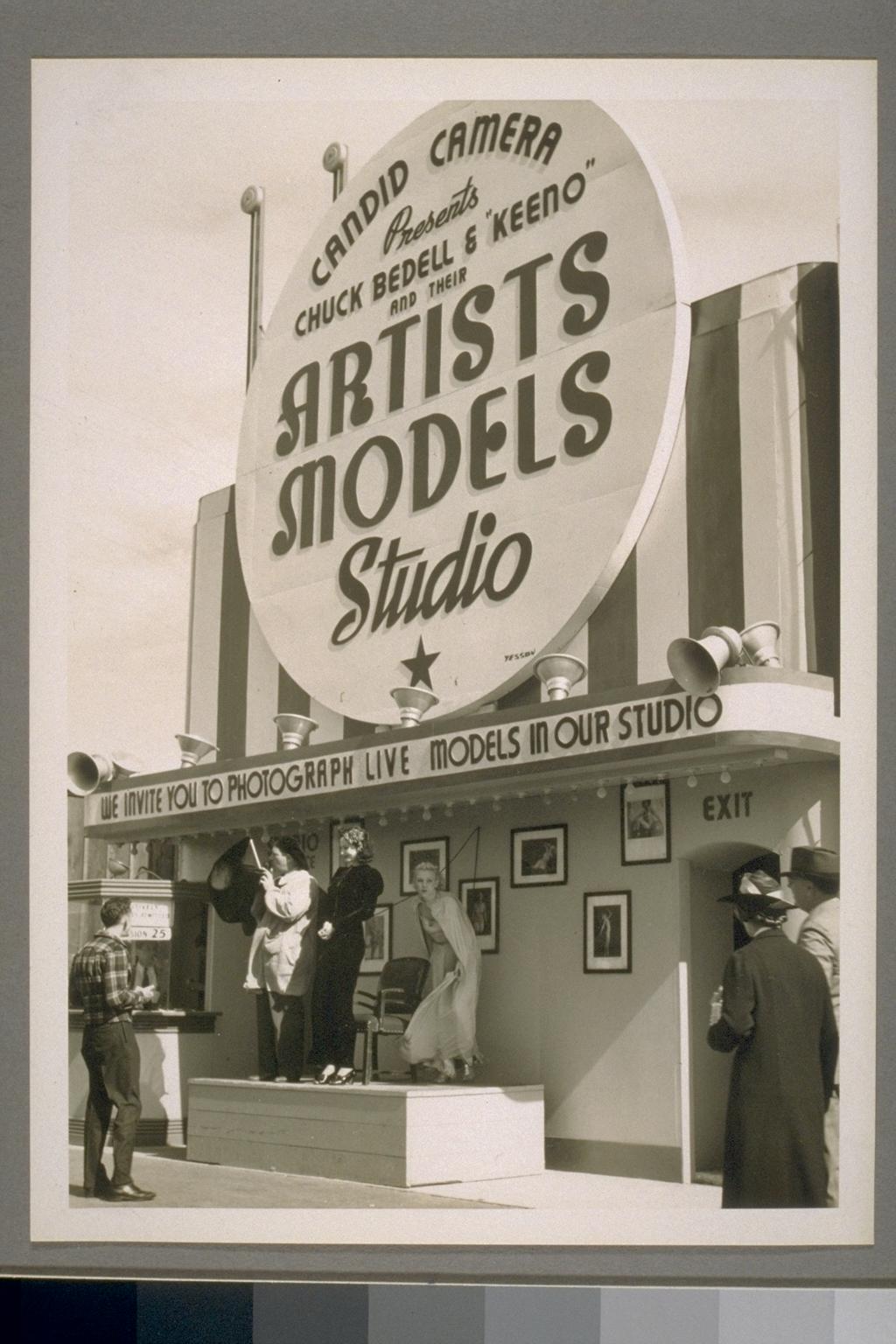
Born in San Francisco, Noel Toy (real name Ngun Yee) got her start in showbiz in 1939 at the Golden Gate International Exposition held on San Francisco's Treasure Island. A UC Berkeley student at the time, she was offered a job at the Expo's Chinese Village that evidently involved "little more than standing around in a Chinese gown." Noel soon found another job — that also required little more than standing around, and in a lot less than a gown — at the Candid Camera attraction, which invited fairgoers to photograph live nude models.

When the Forbidden City's PR man suggested to owner Charlie Low that what they needed to attract more customers was a Chinese bubble dancer, Charlie hired Noel to perform at his nightclub. Undoubtedly, the idea was inspired by Sally Rand — the original bubble dancer — who was stirring up lots of controversy and making lots of money at the Golden Gate Expo with her "Nude Ranch" and nightly performances at The Music Box (currently known to Bay Area residents as the Great American Music Hall). So that's how UC coed Ngun Yee came to be known as Noel Toy, the "Chinese Sally Rand".

Business at the Forbidden City tripled within three months, and Noel soon began performing at other clubs around San Francisco. In February 1941, she was appearing in Reno, Nevada and later that year she was invited by a promoter to perform in New York City, where she was a big hit.

In the fall of 1942, Noel appeared in the Broadway revue Wine, Women and Song. The show ran for 150 performances, from September 28th until December 3, when it was shut down on obscenity charges. A witness at the trial said that Noel Toy "was nude except for her shoes and one other piece of clothing, and pretended to dance but didn't move her feet" (Associated Press, December 1, 1942). Another witness, commenting on her signature fan dance, testified that Noel intermittently revealed "all or substantially all her body." On December 18, the producer of the show was sentenced to a six month prison term, and the judge had these words to say to Noel Toy and fellow performer Margie Hart.

Whether or not these so-called leading attractions, these artists of the strip tease, are to be prosecuted under another law for their indecent performance, this court does not presume to know.

But the hope is expressed that they earn the just contempt of those in the theatrical profession who are still interested in maintaining the high moral standards of the stage.

—International News Service, December 18, 1942

Noel Toy gave up burlesque dancing but continued performing songs and monologues in NYC. In 1945 she met and married actor Carleton Young and retired from the stage. Noel subsequently had a sporadic career in film and television, which included appearances in Soldier of Fortune (1955), Big Trouble in Little China (1986), and a few episodes of M*A*S*H*, but not surprisingly, Hollywood didn't have much to offer her.

But lucky for us, the famously sexy — and infamously indecent — dance that made Noel Toy a star for a few brief years has been preserved on film and made available by the Prelinger Archives.


Further Reading and Viewing

Forbidden City: The Golden Age of Chinese Nightclubs


Walton Biggerstaff training Forbidden City dancers (1944)

I had the pleasure of chatting with cartoonist and herstorian Trina Robbins at WonderCon today. Earlier in the week in the course of my habitual internet research, I discovered that she recently finished writing a book about the Chinese American nightclub scene that thrived in San Francisco from the late 1930s to the early 60s. Due to be released sometime in the fall, Forbidden City: The Golden Age of Chinese Nightclubs will be structured as a collection of oral history interviews with performers from this exciting era. According to Trina, the book will also feature lots of photos. I can't wait!

Stay tuned for a post about Noel Toy, a burlesque dancer who worked at the Forbidden City nightclub during the early 1940s...
Related Posts Plugin for WordPress, Blogger...